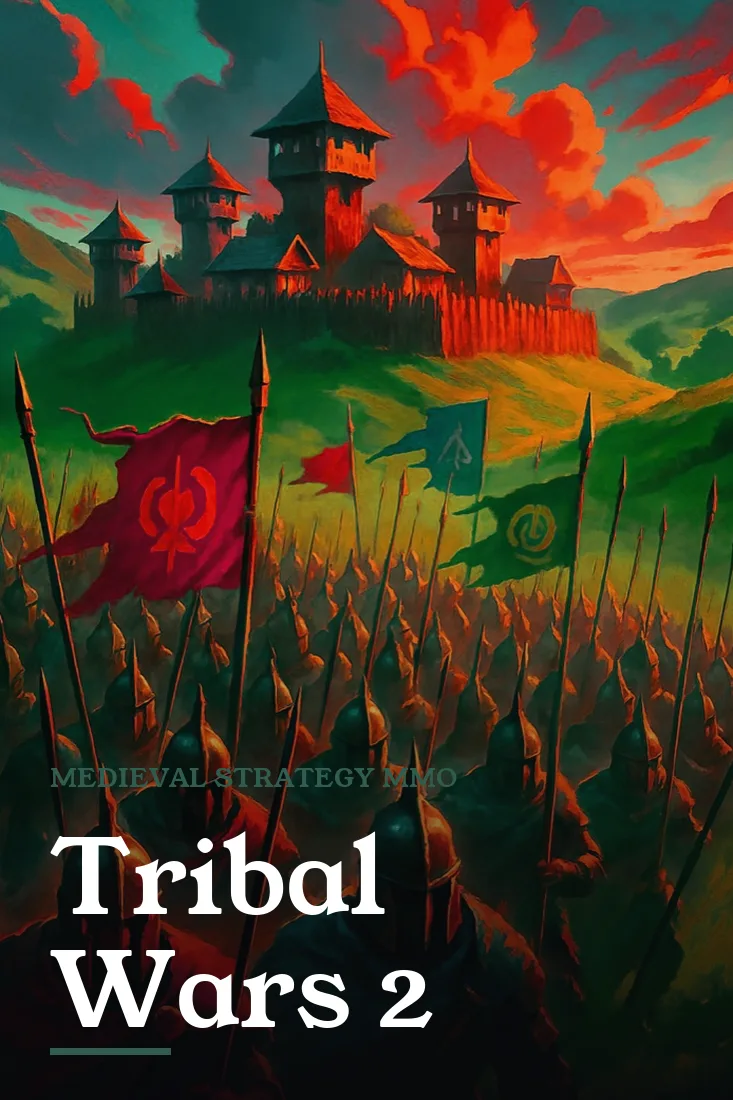
Tribal Wars 2 opened its browser beta in September 2014, and it still feels like the most purely military game on our list. You begin with a single village in a war-torn medieval landscape, surrounded by players who have exactly the same plan as you: grow fast, then take someone else’s village before they take yours.
What makes it more than a raid simulator is the structure around that fight. Tribes coordinate campaigns that last weeks, the map shows armies moving in real time, and the buildings that matter most, from the tavern’s spies to the academy’s noblemen, reward planning over clicking. It is demanding, occasionally merciless, and excellent at making a small victory feel enormous.
Timber, clay, iron and the hungry farm
The economy is lean and familiar. A timber camp, a clay pit and an iron mine produce the three building materials, and the farm produces provisions, which every building and every soldier consumes. Upgrading each producer raises its hourly output, and the farm quietly becomes the limit on everything you want to do.
Different parts of the map also boost production of particular resources, which makes where you settle and expand more than a matter of safety. Up to sixteen kinds of building fill out a village, from barracks and walls to the hospital that heals fallen soldiers. The early economy is quick to learn, and within days our editors were trading tips about warehouse levels like old hands.
Spearmen, axes and the matter of noblemen
The army is a careful balance of offence and defence. Spearmen and swordsmen hold the line, axe fighters and light cavalry hit hard, archers and mounted archers add range, and rams and catapults handle walls and buildings. Choosing the right troops for each target, and reading the scout reports from your tavern’s spies before you commit, is where battles are really won.
Conquest belongs to the nobleman. Employed through the academy, which also mints the coins that pay for them, noblemen lower a village’s loyalty until it falls into your hands. Taking your first village, after days of scouting, clearing defences and timing your nobles, is the moment Tribal Wars 2 clicks. Losing one of your own teaches the same lesson, more painfully.
Orders, paladins and other ways to specialize
Later buildings deepen the choices. The Hall of Orders asks you to commit to one of three orders: one unlocks the Berserker and cheapens offensive units, one unlocks the Trebuchet and favours defensive troops, and the Guild of Thieves opens the Sabotage technology and makes coin minting cheaper. It is a meaningful fork, and tribes often want members to choose in a coordinated way.
The paladin, recruited through the statue, is your personal champion, a powerful unit that strengthens your forces and gives your village a figurehead. Seizing a fortress grants regional power and lets you bestow titles such as Master of Spies or Grand Inquisitor on fellow tribe members, a lovely bit of medieval theatre that tribes take very seriously.
Life inside a tribe that means business
Tribes are the beating heart of Tribal Wars 2. A good one shares scout reports, staggers attacks so they land seconds apart, and sends support troops to a member under siege. Our tribe ran its forum like a small military staff, and the planning threads before a big offensive were some of the most absorbing reading we did all month.
The same intensity is the game’s main barrier. Worlds run for months, attacks can arrive at any hour, and a player who drops out for a week can return to find villages gone. The mobile app, which uses the same account as the browser, helps a great deal; we defended more than one village from a Toronto streetcar. Still, this is a commitment, and it is best entered with that in mind.
Your opening week in Tribal Wars 2
- Keep the farm upgraded ahead of your troop plans, since provisions limit both buildings and soldiers.
- Build the tavern early and scout neighbours before deciding who to raid or befriend.
- Raise the wall steadily; it multiplies your defenders and discourages casual attackers.
- Find an active tribe in your area and read its rules on support and attack timing.
- Start saving for the academy and noblemen, because your first conquest takes long preparation.
What won us over
- Noblemen and loyalty make every conquest a planned, multi-day operation.
- Hall of Orders choices give villages genuinely different specializations.
- Real-time army movement on the map adds tension to every incoming attack.
- Tribes coordinate with a depth that makes victories feel genuinely shared.
Where the empire creaked
- Absences of even a few days can cost you villages on busy worlds.
- Newcomers face experienced tribes that know every timing trick.
- The pressure to be online at awkward hours never fully goes away.
The commander Tribal Wars 2 was made for
Tribal Wars 2 is for players who want war at the centre of their strategy game and enjoy the planning that makes it work. If scouting, timing and tribe politics excite you, it delivers months of tension. If you want a quiet city, choose one of our calmer builders.
Where Tribal Wars 2 lands after a month
Tribal Wars 2 is the sharpest war game on our list. Noblemen, orders and paladins add depth to a classic formula, and the real-time map and shared account across browser and phone make it more practical than its ancestor. It demands time and rewards discipline, and tribe life is outstanding. Calmer players will find it exhausting, but for a would-be warlord it is hard to beat.