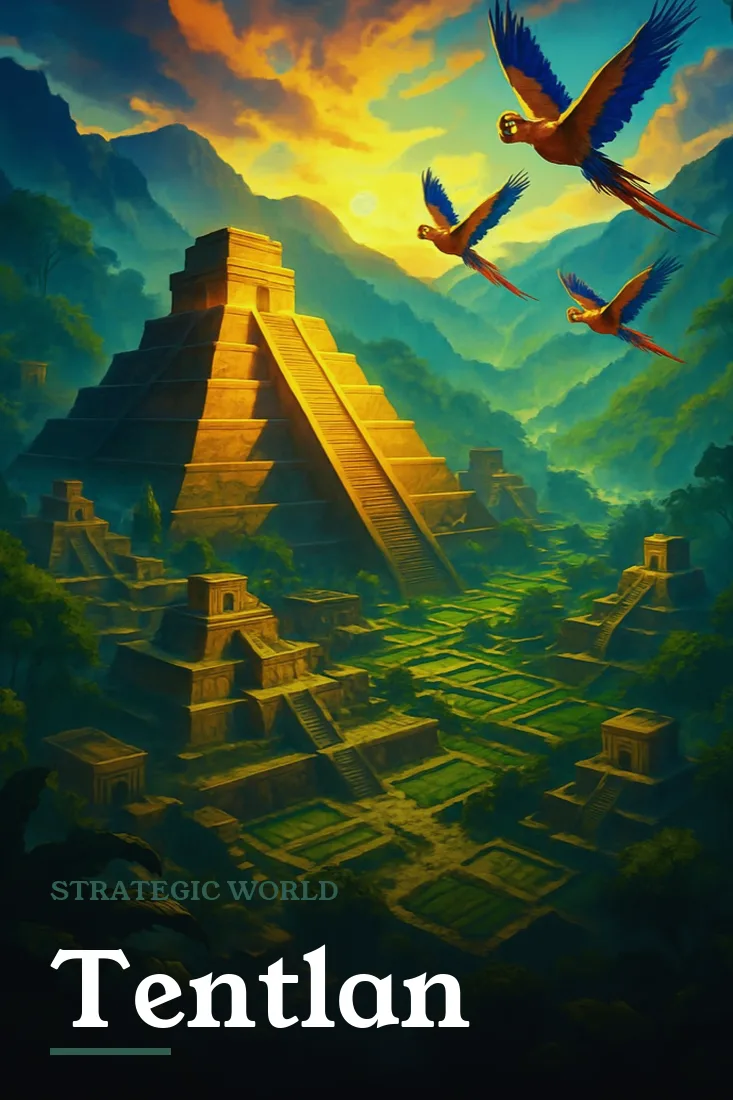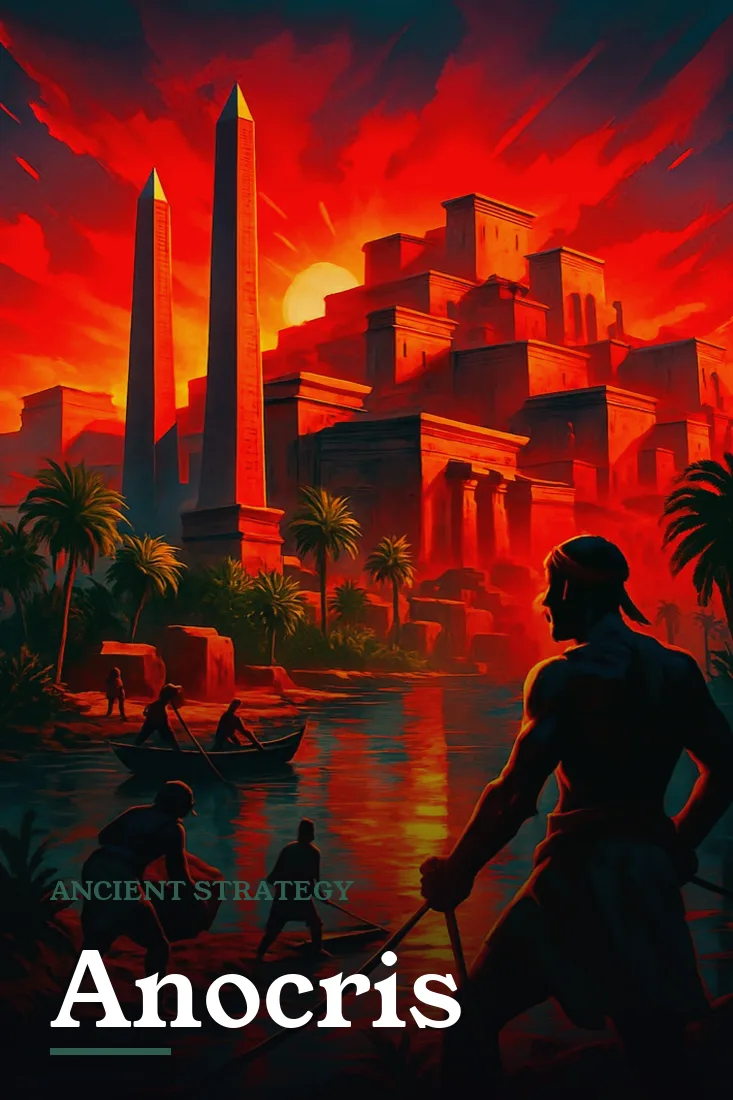
Anocris opens on a scene that genre veterans will find unusual: a small settlement on the Nile, fertile plains, the edge of the Great Desert, and no immediate sense of threat. It is 1200 BCE, you are a pharaoh-in-waiting, and the first job is not to arm yourself but to make your city work.
That gentleness is the game’s defining quality. Anocris comes from Lionmoon, the same German studio behind Tentlan, and shares some of its ideas, such as season-based magic, but it wraps them in a slower, more forgiving rhythm. For players who want to learn browser strategy without being farmed in their first week, it was the kindest world we visited.
A settlement on the river
City-building comes first. You raise authentic Egyptian buildings whose effects strengthen your economy, your defences and your military, and you make deliberate choices about which resources to push. The game frames this as a puzzle of efficiency: production choices matter, and reaching maximum output is what lets a city sustain expansion later.
We enjoyed how readable the early weeks were. There is always a sensible next building, and the city grows visibly as you play. It never reaches the economic depth of Ikariam’s trade web, but the clarity is part of the appeal, and our editor who had never played a browser strategy game before found her feet within two evenings.
Ra, Anubis and the festival calendar
The gods are present in a practical way. You can call on deities such as Ra and Anubis, cast spells on your cities, and celebrate festivals that grant strategic advantages. Season spells, a cousin of Tentlan’s rituals, let you shape conditions to suit your plans, and secret sciences add a research layer that deepens your civilization over time.
This layer gives the calm opening some texture. Timing a festival or spell to support a building push or a campaign feels like proper statecraft rather than a passive bonus. We would have liked clearer explanations of each effect in the game itself, but once you have read them, they make a quiet economic game feel alive with ritual.
Charioteers, Medjay and nomad camps
When it is time to fight, the roster is thematic and distinct: charioteers, Medjay, Anubis warriors and the clairvoyant high priests of Amun, who lend their insight in battle. You can raid nomad camps to grow your power without constant conflict, which makes combat something you choose rather than something that is done to you.
Player-versus-player war is available for those who want it, and the clash for control of the river is a stated goal of the game. On our world, though, most of the action came from players testing each other carefully rather than launching all-out offensives. That suits Anocris well, and it is why we rank it as the calmest introduction to the genre on our list.
Tribes on the sand
Joining a tribe lets you coordinate attacks and defences with other pharaohs and widen your influence through diplomacy. Communities were small on our world, and tribe life never reached the intensity of Grepolis or Tribal Wars 2, which is reflected in our score for alliance life. Players who want a busy political scene should temper their expectations.
On the other hand, the smaller scale makes it easier to matter. A committed player can become a pillar of a tribe within weeks, and the game’s steady pace means nobody is left behind for missing a day. With an official app as well as the browser version, keeping a city ticking over during a winter commute is easy.
Your opening week in Anocris
- Read the descriptions of your first buildings closely, since each strengthens economy, defence or military.
- Plan production around what your next few buildings need rather than spreading evenly.
- Try your first festival or season spell during a building push to feel its effect.
- Raid a nearby nomad camp with a small force to learn combat safely.
- Look for a friendly tribe once your city is stable, and introduce yourself.
What won us over
- A gentle, forgiving opening that suits newcomers to the genre.
- Ancient Egyptian setting with gods, festivals and thematic troops.
- Nomad camps let you grow through combat without provoking neighbours.
- Season spells add a layer of timing to an otherwise calm economy.
Where the empire creaked
- Economic depth is modest beside Ikariam or Travian.
- Small communities make tribe life quieter than many will want.
- Spell and festival effects need clearer in-game explanation.
The commander Anocris was made for
Anocris suits the player who wants an ancient empire without an ancient war on day one: a builder who enjoys theme, gods and gradual growth. It is the best first step for newcomers to browser strategy. Veterans seeking fierce rivalry will want more.
Where Anocris lands after a month
Anocris is the gentlest empire on our list and the easiest to recommend to someone new to the genre. Its Nile setting is atmospheric, its festivals and season spells give the calm economy some ritual, and nomad camps make combat optional for as long as you like. Its depth and communities are modest, but as a first city that never punishes you for living your life, it shines.