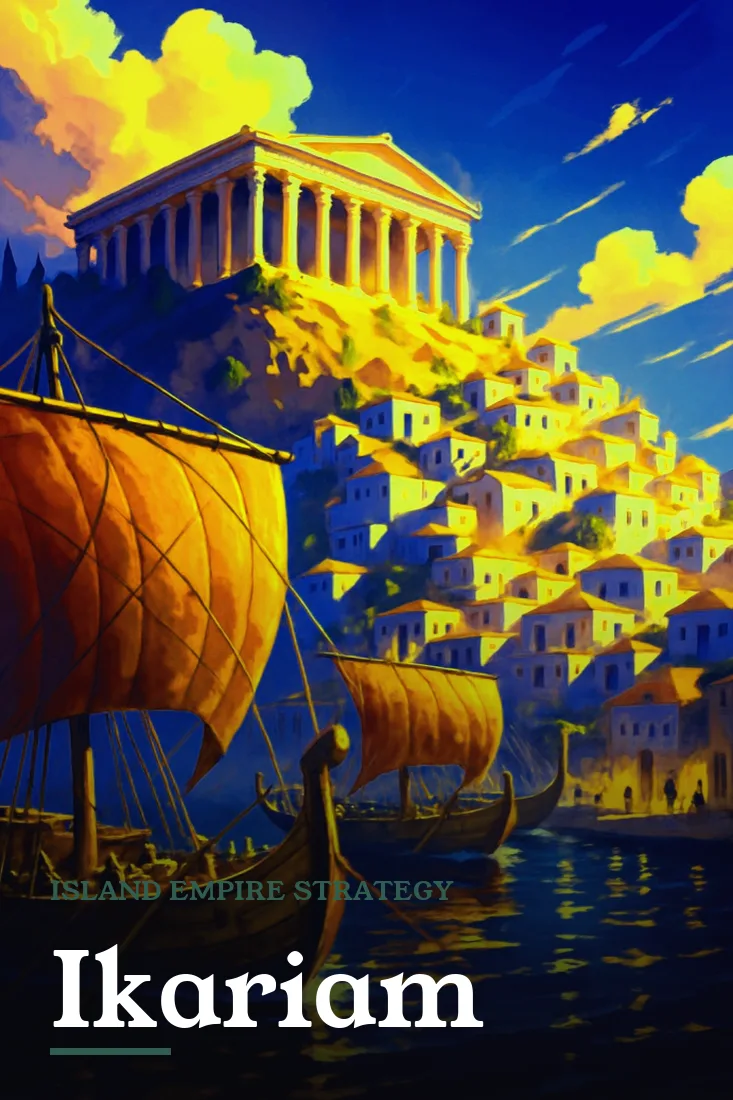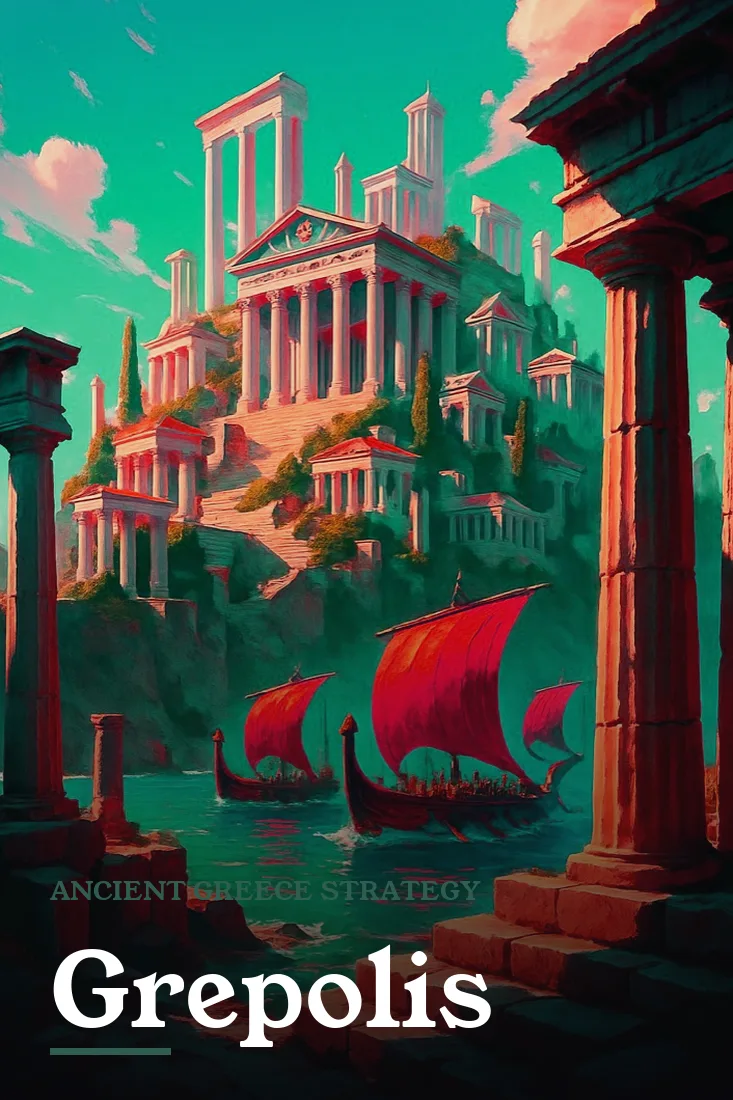
A month into our Grepolis world, the most useful thing any of us owned was not a wall or a temple. It was a handful of transport boats. Every polis in the game stands on an island, and that one design choice reshapes everything else: you cannot march on a neighbour across the strait, you have to ship your army there, and your enemy has to do the same to reach you.
The result is a strategy game with a geography you actually feel. Islands become neighbourhoods, straits become borders, and the ocean grid becomes the frame in which alliances think. Layered on top are six patron gods, mythical units, heroes and a culture system that decides how many cities you may hold. It is busy, but rarely confusing, and it is the game we kept opening long after our review notes were done.
Three resources, one Senate and a long building queue
Your economy rests on three producers: the Timber Camp for wood, the Quarry for stone, and the Silver Mine for the silver coins that pay for most of the interesting things. The Senate is the heart of the polis, since it governs construction and without upgrading it nothing else grows far. Farms set the population ceiling, warehouses cap your storage, and the barracks and harbour turn resources into an army and a navy.
The opening days are calm and well paced. Timers are short, quests nudge you toward sensible upgrades, and the tutorial explains the island you are standing on, including the farming villages that trade with you or supply you once you have built a market relationship with them. By the end of the first week we each had a tidy little polis and a clear view of the next step: an Academy, research, and boats.
Favour, temples and a sky full of monsters
The Temple is where Grepolis stops being a generic builder. You dedicate your city to Zeus, Poseidon, Hera, Athena, Hades or Artemis, and that god produces favour over time. Favour pays for divine powers, which range from boosting your own production to striking an enemy’s forces, and it also summons mythical units tied to your patron. Poseidon, for example, makes life harder for enemy navies, while Hera leans toward production.
The mythical roster gives battles a texture we enjoyed. Pegasus, the Hydra, the Manticore, Medusa, the Cyclops and the Minotaur all appear, each tied to particular gods, so your religious choice is also a military one. It means two cities on the same island can field very different armies. Choosing a god felt like the first genuinely strategic decision of the game, and it is not one to make on aesthetics alone.
Why your second city is the hardest one
Growth beyond a single polis needs two things: a colony ship, researched in the Academy and built in the harbour, and enough culture to justify another city. Culture points come from events held in the Agora, such as city festivals, Olympic Games, theatre plays and victory processions. They cost real resources, so every celebration is a trade-off against walls and troops.
This is where Grepolis asks for planning. You scout an empty spot, ideally on your own island or a near one, save for the ship, escort it, and pray nobody notices. Conquest of an existing city follows a similar logic with more swords involved. Our second cities all arrived somewhere between the third and fifth week, and each felt earned. The pace of expansion is slow enough to make every new flag on the map mean something.
Alliances, wonders and the long political game
Alliances in Grepolis are the real units of power. They share reports, coordinate attacks across islands, and pool their efforts in the late game, when building World Wonders becomes the goal that unites a whole world. Heroes such as Leonidas, Hercules, Andromeda and Helena lend their own powers to cities or armies, and alliances quickly develop opinions on which ones are worth the investment.
We joined a mid-sized alliance on our world and found the forum culture welcoming, if very organized; new members were expected to post their city coordinates and troop counts within days. InnoGames has also added other ways to play on top of the classic worlds, including the Olympus mode introduced in 2020, where the aim is to take and hold Olympus itself. For anyone who likes politics as much as warfare, it is a deep well.
Your opening week in Grepolis
- Follow the tutorial quests honestly; they steer you toward the Senate, resource buildings and farm upgrades in a sensible order.
- Pick a patron god only after reading what each one offers, because favour and mythical units shape your future army.
- Keep the warehouse from overflowing; spending resources before bed is the cheapest defence any new city has.
- Build the harbour and Academy early, then research toward transport boats and a colony ship.
- Join an active alliance by the end of the week and post your city details on its forum.
What won us over
- Island geography makes naval logistics the real heart of every strategic decision.
- Choosing a patron god changes your army, not just a bonus percentage.
- Culture points turn expansion into a satisfying, deliberate project rather than a land grab.
- Alliance tools and forums support serious long-term cooperation across a whole world.
Where the empire creaked
- Night attacks can still catch out players in Canadian time zones on European-heavy worlds.
- The interface piles many menus on top of one another once you hold several cities.
- Waiting for favour and colony ships slows the middle game more than some will like.
The commander Grepolis was made for
Grepolis suits players who want a city to grow, a sea to cross and a group to belong to. If you enjoy reading a map, timing a fleet and debating which god to serve, it will hold you for months. Players who want instant battles should look elsewhere.
Where Grepolis lands after a month
Grepolis is the most complete package on our list: a calm city-builder at the start, a naval strategy game in the middle, and a political world by the end. The gods and mythical units give it a personality its rivals lack, and the island map gives every decision weight. It asks for regular visits and some patience with menus. Give it a month, and it rewards you with the best long game in the genre.