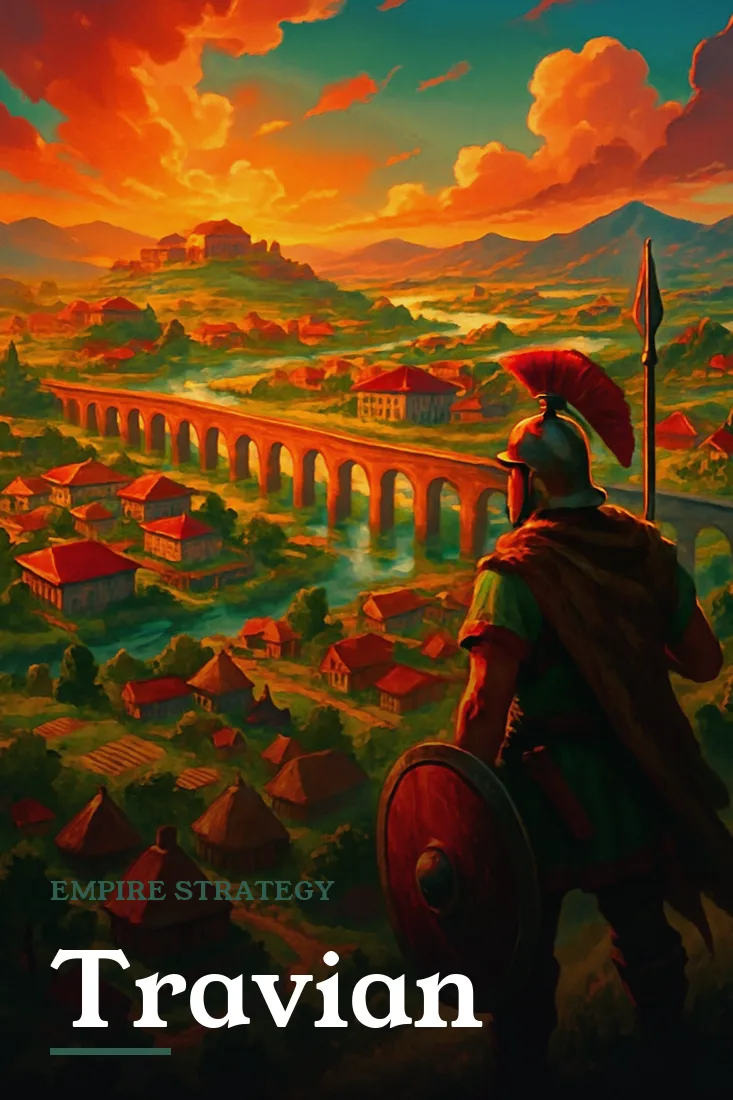
Travian is the game other browser strategy titles are measured against. It first appeared in 2004, and Travian: Legends, the version Travian Games runs today, keeps the same bones: a single village surrounded by fields, a tribe chosen at the very start, and a world that plays out as a round with a clear ending rather than a city that sits forever.
That ending is what sets it apart. Somewhere around day two hundred of a standard round, construction plans for Wonders of the World appear in villages held by the Natars, a non-player tribe. Alliances race to seize them, build a wonder, and defend it to level one hundred. Everything before that moment, every field and every raid, is preparation. Few games give a long campaign such a satisfying shape.
Eighteen fields and four resources
Every village is split in two. Around the outside lie eighteen resource fields producing wood, clay, iron and crop; inside sits the village centre with room for more than twenty buildings. Upgrading fields raises production, and buildings in the centre raise population, unlock troops and generate culture points. Crop is the quiet constraint, since every soldier eats, and a large army on a weak crop supply starves.
The first weeks are a tidy economic puzzle. You weigh field upgrades against warehouse and granary capacity, decide when to build a cranny to hide resources from raiders, and learn which neighbours are farming you. It is quieter than its reputation suggests at the very start, but the map fills up quickly, and by the second week we had all received our first unfriendly visitors.
Romans, Gauls, Teutons, Huns, Egyptians
Your tribe is chosen once and shapes the whole round. Romans can raise more buildings at once, Gauls are quick and strong in defence, Teutons field cheap troops built for raiding, Huns lean toward cavalry offence, and Egyptians favour economy and defensive strength. Each tribe has its own troop list, and the game offers around fifty unit types across them.
We tried three tribes across two worlds, and the difference was real. Our Teuton player spent the first fortnight raiding inactive villages and loved every minute. Our Egyptian player built a sturdy economy and turtled happily behind it. The Roman player spent the whole time juggling simultaneous construction. Pick based on how you want to spend your evenings, not on which tribe looks strongest on a forum.
Culture, settlers and the art of expansion
A second village needs settlers and enough culture points, which most buildings produce passively. The number of points required rises with each village you already control, so expansion slows naturally as your realm grows. You can also take an existing village with administrators, the tribe-specific leaders who lower a village’s loyalty until it changes hands.
The hero is the other long-term investment. This single unit gains experience in battle, carries items and lends bonuses to your army or economy, and protecting it becomes something of an obsession. Artefacts add a mid-round layer too: they appear on the map, grant village-wide or realm-wide bonuses to whoever holds them, and give alliances something concrete to fight over before the wonders arrive.
The alliance is the real player
In Travian, an alliance is not optional decoration. Members feed each other resources, send defensive troops across the map within minutes of an incoming attack, and coordinate offensives timed to the second. The diplomacy tools let alliances sign non-aggression pacts and military agreements, and the political chatter on a busy world can be as absorbing as the fighting.
This is also where Travian is hardest on a casual player. An alliance pushing for a wonder expects members online at awkward hours, and a world dominated by European players can mean defending at 3 a.m. Toronto time. Many Canadians solve this with a dual, a trusted friend sharing an account through the game’s own system. If that sounds like too much, it probably is, and our other picks will suit you better.
Your opening week in Travian
- Choose your tribe on purpose: raider, builder or defender, since you cannot change it later in the round.
- Upgrade resource fields evenly at first, and keep crop production ahead of your plans for troops.
- Build a cranny early so raiders find little worth taking during your first quiet nights.
- Complete the adventure tasks with your hero carefully; items and experience accumulate into real strength.
- Join an alliance before your beginner protection ends, and learn its rules about defence calls.
What won us over
- A clear round structure with a genuine endgame around the Wonders of the World.
- Five tribes that genuinely play differently from the first hour to the last.
- Culture-point expansion forces careful, meaningful choices about every new village.
- Alliance diplomacy and coordination are as deep as any strategy game we know.
Where the empire creaked
- Late-round play demands check-ins at hours that clash with work, sleep and family.
- Newcomers can be farmed hard by experienced neighbours once protection ends.
- The interface carries two decades of additions and shows its layers.
The commander Travian was made for
Travian is for the patient, organized commander who wants a campaign with a beginning, a middle and a decisive ending. If you enjoy spreadsheets, timing troop arrivals and belonging to a disciplined alliance, nothing on our list goes deeper. If your evenings are unpredictable, start elsewhere.
Where Travian lands after a month
Travian remains the purest form of the village empire game, and the round structure gives it a sense of purpose its rivals lack. Five distinct tribes, culture-based expansion and a wonder race at the end make for a campaign that feels genuinely historic by the final week. The cost is time: it asks more of your days than anything else here. For players who can give that, it is magnificent.